The Interest Rate Froze — Nobody Said Anything About the Rest of the Bill
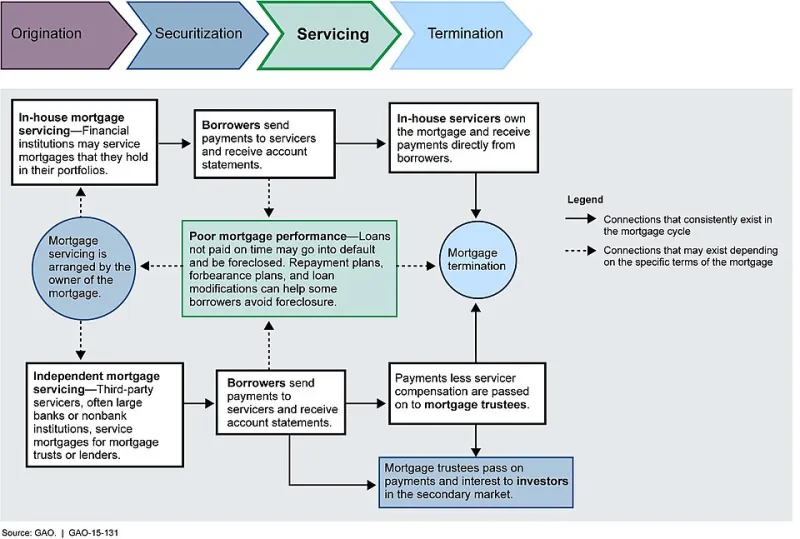
Photo: U.S. Government Accountability Office, Public domain, via Wikimedia Commons
Ask any new homeowner what their mortgage payment will look like in 2040, and they'll usually answer with confidence: the same as today, give or take. That's the whole selling point of a fixed-rate loan, after all. You sign the paperwork, the rate gets locked, and the future stops being scary.
There's just one problem with that mental model. The interest rate is fixed. The payment is not.
The Part of Your Payment Nobody Explains at Closing
A typical monthly mortgage payment bundles four things: principal, interest, property taxes, and homeowners insurance — the last two held in something called an escrow account. Your lender collects a little extra each month and pays the tax bill and insurance premium on your behalf.
Here's the catch: only the first two numbers are truly locked in. The other two belong to your county assessor and your insurance company, and neither of them has any obligation to respect your loan terms.
When property taxes rise — and they tend to rise as home values climb — your escrow contribution goes up to cover the difference. When your insurance premium renews higher, same story. Your lender isn't raising your payment out of spite. They're just passing along bills you were always going to owe.
The Insurance Surprise That's Getting Harder to Ignore
For decades, this escrow drift was a slow simmer — a payment creeping up $20 or $40 a year, annoying but survivable. That's changed in parts of the country. Homeowners in Florida, Texas, Louisiana, and California have watched insurance premiums jump by eye-watering amounts as insurers reprice climate risk or pull out of markets entirely.
A homeowner in coastal Florida can have an identical interest rate to someone in Ohio and pay several hundred dollars more per month purely because of the insurance line item. In some cases, escrow shortages have pushed payments up by $500 or more in a single year — on a loan that was, technically, fixed the entire time.
Taxes: The Silent Escalator
Property taxes work differently depending on your state, but the general pattern is the same: assessed values get revisited, and the bill follows. Some states, like California, cap assessment growth under Prop 13. Others, like Texas, reassess more aggressively and let the bill swing with the market.
If you bought a home in a neighborhood that got hot, congratulations and condolences — your tax bill found out. And because most lenders require escrow accounts for buyers who put less than 20% down, a huge share of American homeowners feel every one of these increases directly in their monthly payment.
Where the 'Fixed Means Fixed' Idea Came From
The confusion is understandable, and it's not accidental. The 30-year fixed-rate mortgage was born in the 1930s as a response to the Depression-era wave of foreclosures, and it was marketed for generations on one promise: predictability. Before this loan existed, homeowners faced short-term balloon loans that banks could refuse to renew — genuine uncertainty.
The fixed-rate mortgage solved a real problem, and the marketing shorthand — "lock in your rate" — eventually morphed in the public imagination into "lock in your payment." Those were never the same thing. The loan documents, if anyone read them, were always clear that escrowed amounts are estimates subject to change.
The myth persists because it's mostly true in a narrow sense, and because the difference between "rate" and "payment" only becomes personal when the escrow analysis letter arrives. Until then, it's a distinction without a felt difference.
So What Can You Actually Count On?
A fixed-rate mortgage does lock in something real: the interest rate and the principal-and-interest portion of your payment. If you can pay taxes and insurance yourself — which some lenders allow once you have significant equity — you'll still owe them, but you'll control the timing and see the bills directly.
The realistic picture of long-term homeownership looks like this: your rate stays put, your housing cost does not. Payments rise with taxes, insurance, HOA dues if you have them, and maintenance that never appears on any statement because there's no line item for a water heater failing on a Sunday.
The takeaway isn't that fixed-rate mortgages are a bad deal — they remain one of the best financial instruments available to American households. It's that the word "fixed" covers a smaller slice of your monthly bill than most people assume. Budget for the rate you locked in, and then budget again for everything the lock doesn't touch.