When Your Agent Says 'Up-and-Coming,' They're Reading the Same Playbook as Every Other Agent in Town

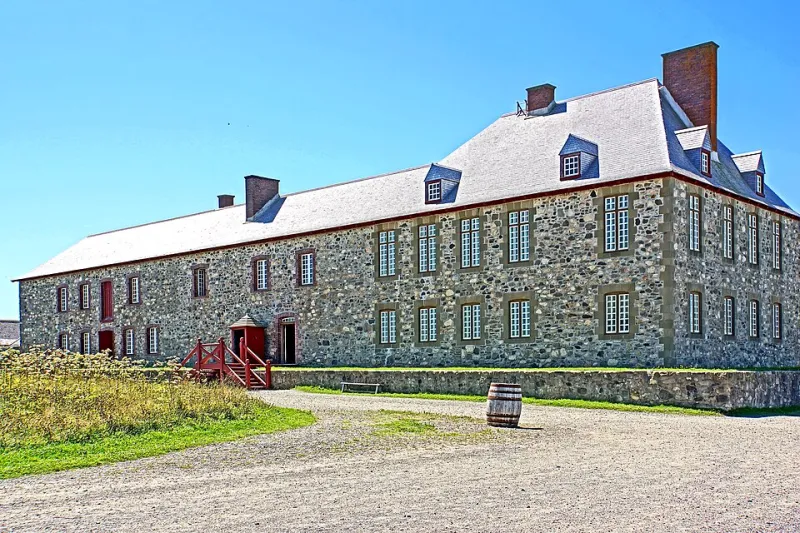
Photo: Dietmar Rabich, CC BY-SA 4.0, via Wikimedia Commons
There's a particular kind of excitement that comes with being told you're getting in early. Your agent mentions a neighborhood you've never considered, lowers their voice slightly, and says something like, "This area is really starting to turn." It feels like a tip. Like you're being let in on something.
Except here's the thing: that same tip has probably been delivered in that same neighborhood for the last decade. And the people who bought in five years ago on the same promise are still waiting.
The Language Is Designed to Feel Exclusive — It Isn't
Real estate has a whole vocabulary for neighborhoods in flux. "Transitional." "Emerging." "Gentrifying." "Up-and-coming." These phrases do describe something real — neighborhoods do change — but they've also become a kind of marketing shorthand that gets applied long before any meaningful shift has actually happened.
The problem is that agents and investors are largely drawing from the same publicly available data: census tract income changes, permit activity, walkability scores, proximity to established desirable areas. When everyone's reading the same signals, the "early mover advantage" disappears fast. By the time a neighborhood makes it into an agent's pitch deck as "emerging," institutional investors have often already purchased dozens of properties there. You're not getting in early. You're arriving at the party after the caterers.
What Actually Predicts Neighborhood Change
Here's where it gets more concrete. Genuine neighborhood transformation tends to cluster around a handful of measurable, trackable factors — and vague vibes about a coffee shop opening are not among them.
Transit infrastructure is probably the single most reliable predictor. When a city announces a new light rail line, bus rapid transit corridor, or subway extension, property values along that corridor tend to move — sometimes years before construction is finished. This isn't speculation; it's well-documented in urban planning research. Cities like Denver, Dallas, and Atlanta have seen predictable appreciation arcs tied directly to transit investment timelines.
Institutional money moving in is another hard signal. When a hospital system, university, or major employer announces an expansion or relocation near a specific area, the surrounding neighborhoods tend to follow. These aren't coincidences. They're the result of internal site analyses that factor in workforce housing demand, land costs, and long-term development potential.
Zoning changes matter enormously and get almost no attention in buyer conversations. When a city rezones land from single-family to mixed-use or increases density allowances, it's essentially announcing where growth is going. Local planning department records are public. Most buyers never look at them.
Permit activity — specifically, the volume and type of building permits being pulled — is a ground-level signal that a neighborhood is actually changing, not just theoretically changing. A cluster of gut-renovation permits and new construction filings tells a more honest story than a listing description ever will.
The Permanently Emerging Neighborhood Problem
Some neighborhoods have been "about to turn" for so long that the phrase has lost all meaning. You'll find them in almost every mid-size American city: areas with genuinely interesting bones, maybe some historic architecture, decent proximity to downtown — and a rotating cast of optimistic buyers who purchased based on potential and are now just... living there, waiting.
This happens for real reasons. Neighborhood change isn't just about investment; it's about infrastructure, school quality, crime patterns, city budget priorities, and political will. When those underlying factors don't shift, no amount of craft beer bars changes the trajectory. A neighborhood can absorb a decade of optimistic buyers without ever actually "arriving."
The tell is often in the history. If you ask your agent how long the neighborhood has been described as emerging and they get a little vague, that's information. Pull up old listings from five or eight years ago. If the language is identical to today's listings, you're looking at a stalled story, not an unfolding one.
What to Actually Ask
If you're genuinely curious whether a neighborhood is on a real trajectory or just a perpetual marketing concept, a few specific questions cut through the noise:
- Has the city committed capital investment here — infrastructure, transit, parks — with an actual timeline and budget?
- What's the permit-pull trend over the last three years? (Your city's building department has this data.)
- Are institutional buyers — not just individual investors — acquiring property in this area?
- What's the zoning history, and have there been recent changes?
- What do longtime residents say? Not the new arrivals, but the people who've been there 15 years.
None of this guarantees anything. Neighborhoods are complex systems and no formula predicts them perfectly. But these questions give you something more durable than an agent's pitch.
The Real Story
The "emerging neighborhood" framing isn't necessarily dishonest — it's just imprecise in ways that tend to benefit sellers more than buyers. The language creates urgency and excitement around uncertainty, which is a great way to move property and a risky way to make a financial decision.
Real neighborhood change leaves tracks. Transit lines get funded. Permits get pulled. Zoning maps get redrawn. When those things are happening, the story tells itself. When the only evidence is vibes and a new espresso bar, you might want to slow down and ask who else got that same tip — and when.