Getting In Early on a 'Up-and-Coming' Neighborhood Sounds Smart — The Reality Is Messier
Getting In Early on a 'Up-and-Coming' Neighborhood Sounds Smart — The Reality Is Messier
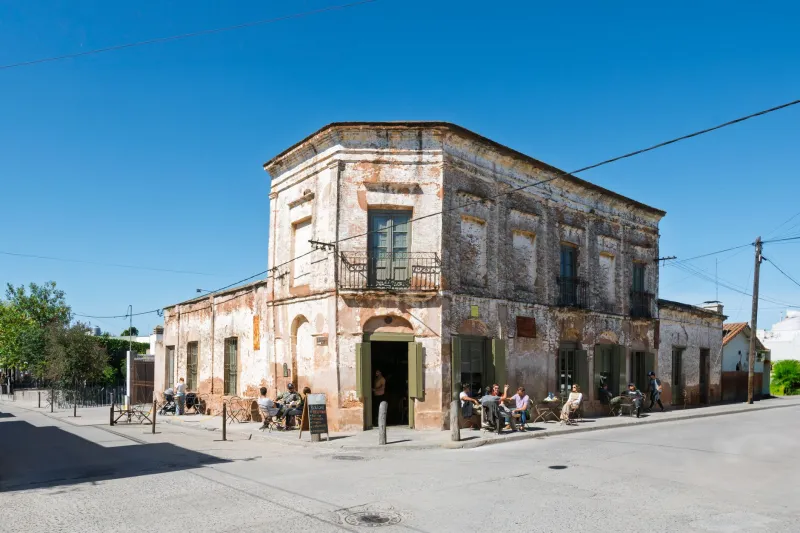
The pitch sounds almost too good to pass up. A neighborhood that's a little rough around the edges, underpriced relative to the ones next to it, with a coffee shop that just opened and a mural on the side of a formerly abandoned building. Your agent says it's the next big thing. Your friend who bought there two years ago says the same. The logic feels airtight: get in before prices rise, wait, and collect the gains.
It's one of the most persistent strategies in American real estate thinking. It's also one of the most reliably overstated.
The Problem With 'Early'
The first issue with the 'get in early' strategy is definitional. By the time a neighborhood is being described as up-and-coming — by agents, in local media, in casual conversation — it has almost certainly already moved.
Neighborhood transformation doesn't announce itself. It happens gradually, driven by shifts in rental rates, small business investment, infrastructure spending, and demographic change that accumulate over years before they're visible enough to generate the kind of buzz that reaches a typical homebuyer. When a neighborhood earns the 'up-and-coming' label in a real estate listing or a weekend magazine feature, that label is usually describing a process that started three to seven years earlier.
The buyers who genuinely got in early — the ones who bought before the narrative existed — weren't following a strategy. They were tolerating real uncertainty in a place that hadn't yet demonstrated it was going to change. Most of them had personal reasons for being there: proximity to work, family ties, limited budgets. They weren't executing a clever investment thesis. They were just living somewhere that happened to change around them.
By the time the thesis is articulable, the easy money is already gone.
Who Actually Profits From Neighborhood Transformation
When a neighborhood does successfully gentrify — and many don't, despite years of being described as on the verge — the financial gains are distributed in ways that don't align neatly with the 'buy early' narrative.
The largest beneficiaries tend to be commercial property owners and developers who acquired land or buildings at distressed prices years before residential buyers started paying attention. They're operating with different information, different holding timelines, and different capital structures than individual homebuyers. A developer who bought a derelict warehouse for back taxes in 2005 and converted it to loft apartments in 2015 captured a gain that no individual homebuyer chasing the neighborhood in 2012 could have replicated.
Long-term residents who owned their homes before the transformation also benefit — sometimes dramatically — though they often face rising property taxes and changing neighborhood character that complicates the financial windfall.
The individual buyer who moves in during the 'up-and-coming' phase — after the narrative has formed but before prices have fully adjusted — often ends up in a more ambiguous position. They paid more than the early arrivals, they're exposed to the real possibility that the transformation stalls or reverses, and their timeline for realizing gains is longer and less certain than they expected.
Why Neighborhood Change Is Harder to Predict Than It Looks
American cities are full of neighborhoods that have been 'about to turn' for fifteen years and haven't. They have the bones — historic architecture, transit access, proximity to downtown — and they have the cultural signals — a gallery, a bar with exposed brick, a farmers market that runs three months a year. But transformation requires more than aesthetics.
What actually drives durable neighborhood change is a combination of factors that are genuinely difficult for individual buyers to assess: anchor institutional investment (a hospital, a university, a government facility), sustained infrastructure commitment from the city, sustained demand from a specific demographic group with the income to support it, and the absence of countervailing forces like persistent crime, environmental contamination, or flood risk that caps appreciation regardless of cultural momentum.
Many neighborhoods have some of these factors and not others. A neighborhood with great bones and a growing arts scene but a persistent flooding problem will cycle through 'up-and-coming' status indefinitely without ever crossing into broad appreciation. A neighborhood with strong institutional anchors but no retail infrastructure may take twenty years to develop the livability that drives residential premiums.
Buyers looking at surface signals — the coffee shop, the murals, the agent's enthusiasm — are working with an incomplete picture of a complex system.
The Holding Period Problem
Even when buyers correctly identify a neighborhood that does eventually transform, there's a timing problem on the back end that doesn't get enough attention.
Real estate is not a liquid asset. If a neighborhood takes twelve years to fully appreciate after you buy in, you've been living there for twelve years. Life changes — jobs, relationships, family size, health — don't pause while you wait for your thesis to play out. Many buyers who purchased in 'up-and-coming' neighborhoods with the intention of holding until prices rose ended up selling before the transformation completed, either because circumstances changed or because the anticipated timeline stretched well beyond what they'd planned for.
The strategy requires not just correct identification of the right neighborhood, but the personal stability and financial flexibility to hold through a timeline that the market sets, not you.
What You're Actually Betting On
When a buyer purchases in an up-and-coming neighborhood, the real bet isn't just 'will this area improve.' It's a layered set of questions: Will the transformation happen at all? Will it happen on a timeline that aligns with my life plans? Will I capture enough of the appreciation to justify the risk and the years of living with the neighborhood's current limitations? Will city infrastructure investment materialize? Will the anchor tenants stay?
Those questions don't have obvious answers, and the real estate industry — which profits from transactions regardless of outcome — has limited incentive to complicate the narrative.
The Takeaway
Chasing the next neighborhood isn't inherently foolish. Sometimes it works. But it works less reliably, less predictably, and for fewer people than the conventional wisdom suggests. If you're genuinely considering buying in an area described as up-and-coming, the most honest question to ask yourself isn't 'will this neighborhood improve?' It's 'would I be okay living here, at this price, if it doesn't?' The answer to that question will tell you more than any appreciation forecast.