Open Floor Plans Feel Like a Design Choice — They Started as a Builder's Budget Trick
Open Floor Plans Feel Like a Design Choice — They Started as a Builder's Budget Trick
Flip through any real estate listing from the last twenty years and you'll find the same words appearing with near-religious consistency: open concept, open floor plan, great room, seamlessly connected living spaces. These phrases are treated as selling points, signals of modernity and good taste. Buyers have paid real premiums for them.
The assumption underneath all of this is that open floor plans represent an evolution in how Americans want to live — a deliberate design philosophy that prioritizes togetherness, light, and flow. That assumption is mostly correct. But it leaves out something interesting: the design spread as fast as it did largely because it cost less to build.
What 'Open Concept' Actually Means Structurally
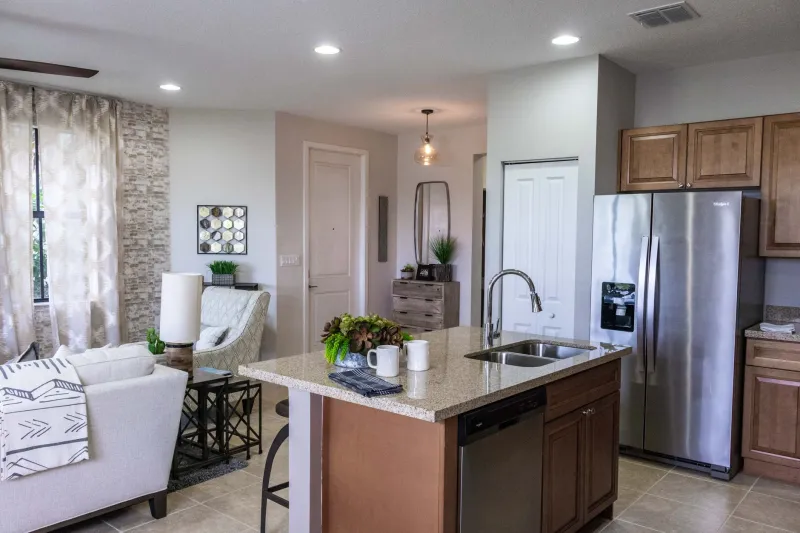
At its most basic level, an open floor plan is a home where the kitchen, dining area, and living room share one continuous space rather than being divided by walls. It sounds simple, but the structural implications matter.
Traditional home layouts used interior walls for two purposes: privacy and load-bearing support. When builders started eliminating those walls, they had to compensate with beams and headers to carry the structural load across wider spans. That's not free — engineered lumber and steel beams add cost.
But here's the trade-off that made builders interested in the first place: eliminating interior walls saves on framing labor, drywall, finishing, painting, and trim. For production builders constructing dozens or hundreds of nearly identical homes, those per-unit savings add up fast. A house with fewer interior walls is quicker to frame, easier to finish, and less expensive to build — even accounting for the structural compensation required.
The math worked in the builder's favor. And the design, it turned out, was easy to sell.
How Mid-Century Economics Laid the Groundwork
The roots of the open floor plan in American residential construction go back to the post-World War II housing boom. Developers like William Levitt, building massive planned communities to house returning veterans and their families, were optimizing relentlessly for speed and cost. Levittown homes were small, efficient, and stripped of architectural complexity.
In that context, eliminating unnecessary interior divisions wasn't a design statement — it was a production decision. You could build more homes faster with simpler floor plans. The 'great room' concept, which merged living and dining functions into a single space, emerged partly from this pressure to deliver square footage without the cost of fully compartmentalized rooms.
Architects like Frank Lloyd Wright had been advocating for open, flowing interior spaces since the early 20th century, framing it as a philosophy of organic living and connection to the landscape. That intellectual framework gave the cost-driven production trend a design vocabulary it could borrow. Builders weren't just cutting costs — they were building 'modern' homes. The framing did a lot of work.
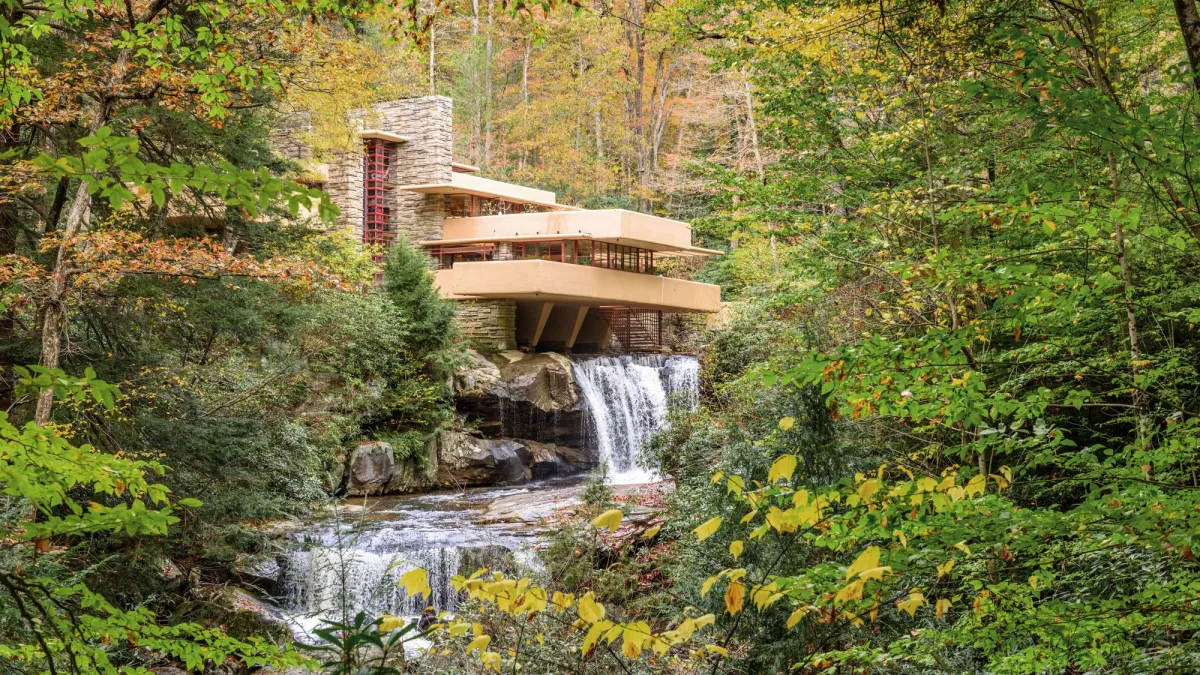 Photo: Frank Lloyd Wright, via media.cnn.com
HGTV Finished the Job
The open floor plan might have remained a practical builder preference without a cultural amplifier to turn it into a desirability signal. That amplifier arrived in the late 1990s and spent the next two decades running on cable television.
HGTV launched in 1994 and spent years broadcasting a consistent aesthetic message: walls were obstacles, kitchens should be visible from the living room, and the ideal home felt expansive and connected. Renovation shows made a ritual out of the dramatic wall removal — the sledgehammer moment, the reveal, the before-and-after contrast. Closed-off rooms became shorthand for outdated, cramped, and unsophisticated. Open space became shorthand for aspirational.
By the 2000s, buyers had absorbed this so thoroughly that 'open concept' appeared as a search filter on real estate platforms. Homes with traditional room layouts sat longer on the market. Sellers renovated specifically to open up floor plans before listing. The preference had moved from builder convenience to buyer demand — which meant builders could charge more for the feature that had originally saved them money.
That's a remarkable reversal. A cost-reduction measure became a premium feature. The construction industry found a way to profit on both ends.
The Downsides Nobody Mentioned During the HGTV Years
As open floor plans became dominant, a quieter conversation started developing among architects, acousticians, and people who actually lived in these homes.
Open layouts are loud. Sound travels freely through undivided space, which means noise from the kitchen — appliances, cooking, conversation — competes directly with the television in the living room and the homework happening at the dining table. Families with young children often discover this faster than anyone.
They're also harder to heat and cool efficiently, since HVAC systems designed for compartmentalized spaces work differently in open volumes. Cooking smells disperse throughout the living area. There's nowhere to put a guest without putting them in the middle of everything.
None of this is fatal. People adapt. But the tradeoffs are real, and they were largely absent from the cultural conversation during the decades when open plans were being sold as unambiguous upgrades.
The Takeaway
Open floor plans aren't a bad design — plenty of people genuinely love them, and the preference for light and connected living space is legitimate. But the next time you're paying a premium for that open-concept kitchen, it's worth knowing the full history: the layout that feels like a lifestyle upgrade was popularized in part because it was cheaper to build, sold to buyers through two decades of television renovation culture, and is now priced as a luxury feature. The house won both ways. You're just the last to find out.