You Didn't Pay Your Buyer's Agent — But Someone Did, and It Was Probably You
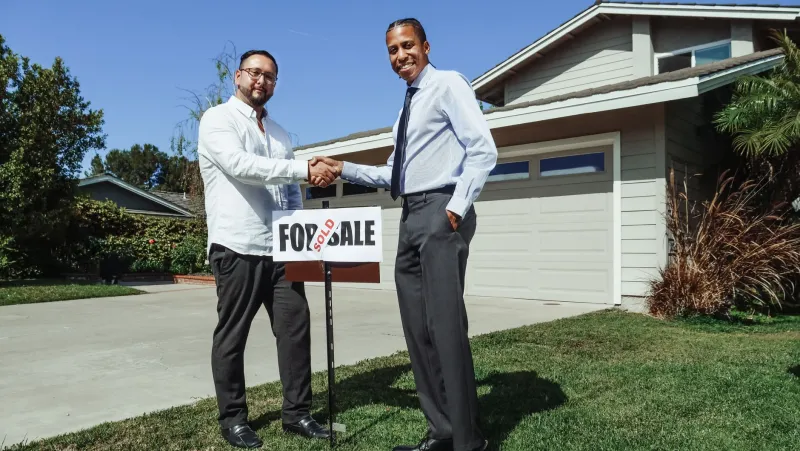
You Didn't Pay Your Buyer's Agent — But Someone Did, and It Was Probably You
Ask most homebuyers whether they paid their real estate agent and they'll say no. The seller covers commissions — that's just how it works. It's one of those real estate facts that gets repeated so often it feels like a law of nature.
It isn't. And the mechanics of how buyer-side compensation actually flows through a transaction tell a very different story than the one most buyers have been told.
The Setup That Made This Possible
To understand how we got here, you have to go back to the mid-20th century, when the modern real estate commission structure was taking shape. The National Association of Realtors and local MLS (Multiple Listing Service) systems became the infrastructure through which homes were bought and sold. Those systems were built around a cooperative commission model: a seller would agree to pay a total commission — typically around 5 to 6 percent — which would then be split between the listing agent and whatever agent brought the buyer.
The logic was practical. Listing agents needed an incentive to cooperate with buyer's agents and show their listings. If buyer's agents had to negotiate their own compensation with buyers directly, the whole system got messier. So the commission got bundled into the seller's side of the transaction, and buyers were told — accurately, in a narrow sense — that they weren't paying for representation.
What that framing left out is that sellers price their homes to account for costs, including commissions. If a seller knows they're walking out of a transaction paying 5 to 6 percent to agents, that cost gets factored into the asking price. The buyer absorbs it through the purchase price, often finances it over 30 years, and pays interest on it. The check doesn't come from the buyer's pocket at closing. But the money does come from the buyer.
Why This Arrangement Persisted
The bundled commission model had a self-reinforcing quality that made it remarkably durable. Buyers liked being told they had free representation. Sellers accepted commissions as a cost of doing business. Agents on both sides had no incentive to disrupt a system that guaranteed them compensation. And because the buyer's agent commission was embedded in the MLS listing data — not prominently disclosed to buyers — most people never thought to question it.
There were also subtler dynamics at play. Buyer's agents had historically been compensated based on a percentage of the sale price, which meant their financial interest was aligned with higher prices, not lower ones. A buyer's agent helping you negotiate $15,000 off the asking price was effectively reducing their own paycheck. That conflict of interest was rarely discussed openly.
For decades, antitrust challenges to this model went nowhere significant. The NAR was powerful, the structure was entrenched, and buyers largely didn't know what they didn't know.
What the Lawsuits Changed
In 2023 and 2024, that began to shift in a serious way. A landmark federal jury verdict in Missouri found that the NAR and several major brokerages had conspired to artificially inflate commissions. The damages were in the hundreds of millions of dollars. The NAR subsequently reached a settlement that included significant rule changes — most notably, the requirement that buyer's agent compensation can no longer be advertised through MLS listings.
What that means in practice: sellers are no longer required to offer buyer-side compensation as part of the MLS listing process. Buyers now need to negotiate and agree to their agent's compensation directly, typically through a written buyer representation agreement before touring homes.
This is a genuine structural shift, even if it's still working its way through the market. Some buyers are now negotiating flat fees or hourly arrangements with their agents. Others are choosing to work without representation on straightforward transactions. The "free agent" assumption is being replaced — slowly — by actual transparency about what representation costs and who's paying for it.
What Buyers Should Actually Know Right Now
The landscape is still evolving, and practices vary significantly by market. But there are a few things worth understanding regardless of where you're buying:
Buyer representation has a real cost. Whether that cost comes through a higher purchase price, a direct fee, or some negotiated arrangement, it exists. Knowing that going in lets you evaluate the value you're actually getting.
You can negotiate. The post-settlement environment has made commission negotiation more explicit. Buyers who ask questions, compare options, and understand what services they actually need are in a better position than those who assume the old defaults still apply everywhere.
"Free" representation can create misaligned incentives. When an agent is compensated based on sale price and has no direct financial relationship with the buyer, it's worth thinking carefully about whose interests are being prioritized in a negotiation.
Not all buyers need the same level of service. First-time buyers navigating a complex market benefit enormously from experienced guidance. Someone buying a straightforward property in a market they know well might need less hand-holding. Paying for representation that matches your actual situation makes more sense than defaulting to the traditional model out of habit.
The Takeaway
The idea that homebuyers get professional representation at no cost was always a simplification. The cost was real — it was just hidden inside the price of the house and spread out over decades of mortgage payments. Recent legal changes have forced more transparency into a system that was designed, intentionally or not, to keep buyers from asking too many questions about it.
That transparency is worth something. The real story behind your "free" agent is that you were paying all along — you just weren't allowed to see the line item.