That Walk Score You're Paying Extra For Measures Distance, Not Whether Anyone Actually Walks

That Walk Score You're Paying Extra For Measures Distance, Not Whether Anyone Actually Walks
Open any real estate listing in a major city and you'll see it: "Walk Score: 87 — Very Walkable!" The number sits there like a badge of honor, and buyers respond accordingly. Apartments in high Walk Score neighborhoods command premium rents, and urban planners cite these ratings when advocating for policy changes.
But what if the most trusted metric for walkability is measuring the wrong thing entirely?
The Algorithm Behind the Score
Walk Score's methodology is surprisingly straightforward: draw a circle around an address, count nearby amenities, and assign points based on distance. Grocery stores, restaurants, schools, and transit stops all factor into the calculation. The closer they are, the higher the score.
It's elegant in its simplicity, which is probably why the metric caught on so quickly when it launched in 2007. Real estate agents love having a quantifiable way to sell neighborhood benefits. City planners appreciate data that supports density arguments. Everyone wins.
Except the algorithm doesn't actually measure walking. It measures proximity.
What the Numbers Miss
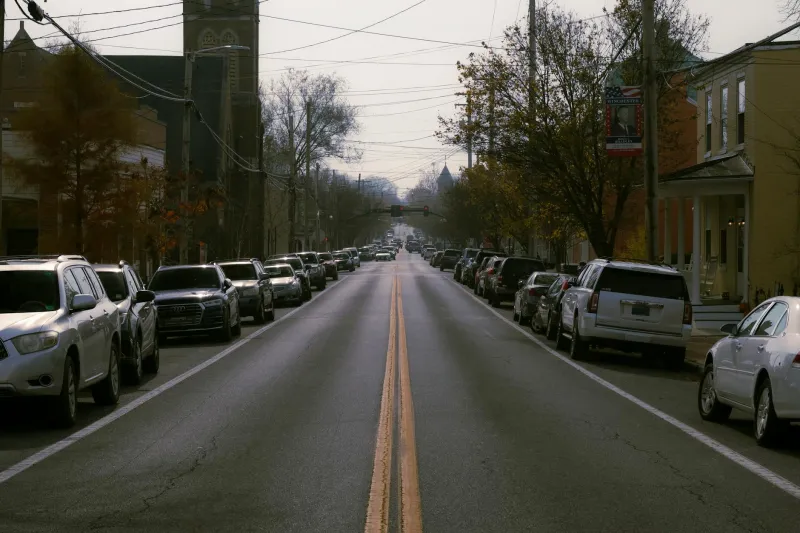
Consider two neighborhoods, both scoring 85 on Walk Score. The first is a flat grid in Portland with wide sidewalks, frequent crosswalks, and a culture where walking to the coffee shop is normal. The second is a steep hillside in San Francisco where everything is technically within walking distance, but the 20% grade means most people drive three blocks to buy milk.
 Photo: San Francisco, via tourtravelandmore.com
Walk Score treats them as equivalent.
The metric also ignores weather patterns that dramatically affect walking behavior. Phoenix and Minneapolis might have identical Walk Scores, but good luck convincing anyone to stroll to dinner when it's 115°F or -15°F outside. Cultural factors matter too — some communities embrace walking as transportation, while others view it as exercise or recreation, not a way to run errands.
The Safety Factor That Doesn't Count
Perhaps most importantly, Walk Score doesn't account for safety or comfort. A neighborhood might have a perfect grid of amenities within a quarter-mile radius, but if the route involves crossing a six-lane arterial without traffic lights or walking past areas that feel unsafe after dark, the theoretical walkability becomes meaningless.
Urban planner Sarah Kaufman from NYU's Rudin Center points out that women, elderly residents, and families with young children often have very different definitions of "walkable" than the young professionals who dominate Walk Score's target demographic. A route that feels perfectly comfortable to a 30-year-old man might be unusable for an 80-year-old woman carrying groceries.
How Walk Score Became a Price Driver
Despite these limitations, Walk Score has evolved from a rough planning tool into a market-moving metric. Research shows that a 10-point increase in Walk Score correlates with a 5-15% increase in property values, depending on the market. In expensive cities like New York and San Francisco, that premium can translate to tens of thousands of dollars.
Real estate platforms like Redfin and Zillow prominently display Walk Scores because they know buyers use them as a shortcut for neighborhood desirability. The score has become a proxy for urban sophistication — a way to signal that you live somewhere "walkable" even if you never actually walk anywhere.
This creates a feedback loop where high Walk Score areas become more expensive, attracting residents who can afford cars and might not rely on walking anyway. The metric designed to measure pedestrian-friendly neighborhoods ends up pricing out the people most likely to actually walk.
The Transit Score Confusion
Walk Score also calculates Transit Scores and Bike Scores for many areas, but these face similar methodological challenges. Transit Score measures proximity to public transportation, not frequency, reliability, or actual ridership. A neighborhood might score high because it's near a bus line that runs every 45 minutes and stops operating at 8 PM.
Bike Score considers bike lanes and terrain, but it doesn't factor in traffic patterns, parking availability, or local cycling culture. A painted bike lane on a busy arterial road counts the same as a protected cycle track through a park.
What Buyers Are Actually Purchasing
When you pay extra for a high Walk Score neighborhood, you're buying proximity to amenities and the theoretical possibility of walking to them. Whether you'll actually walk depends on factors the algorithm can't measure: your lifestyle, the local culture, seasonal weather patterns, personal safety concerns, and plain old habit.
For some buyers, that proximity has real value even if they drive everywhere. Having restaurants and shops nearby means shorter commutes and more options within a small radius. The density that creates high Walk Scores often correlates with other urban amenities like cultural venues, job opportunities, and social energy.
The Planning Tool That Became a Marketing Number
Walk Score's creators originally intended it as a rough planning tool to help people compare neighborhoods. It was never designed to be a precise measurement of walkability, much less a price-determining factor in real estate markets.
But in our data-driven culture, any number that seems to quantify quality of life inevitably becomes a selling point. Walk Score filled a need for a simple metric that could summarize complex neighborhood characteristics, even if that simplification obscured important nuances.
Using Walk Score More Wisely
This doesn't mean Walk Score is useless — just that it measures something more limited than its name suggests. Think of it as a proximity index rather than a walkability assessment. A high score means amenities are nearby, which has value whether you walk to them or not.
If walkability actually matters to your lifestyle, supplement the score with ground-truth research. Visit the neighborhood at different times of day and in different weather. Walk the routes you'd actually use. Talk to current residents about their transportation patterns.
The real story behind Walk Score isn't that it's wrong — it's that it's been asked to do a job it was never designed for. Understanding what the number actually measures helps you decide how much weight to give it in your housing decisions.