The 'Starter Home' Myth: How Real Estate Marketing Created a Life Stage That Never Existed
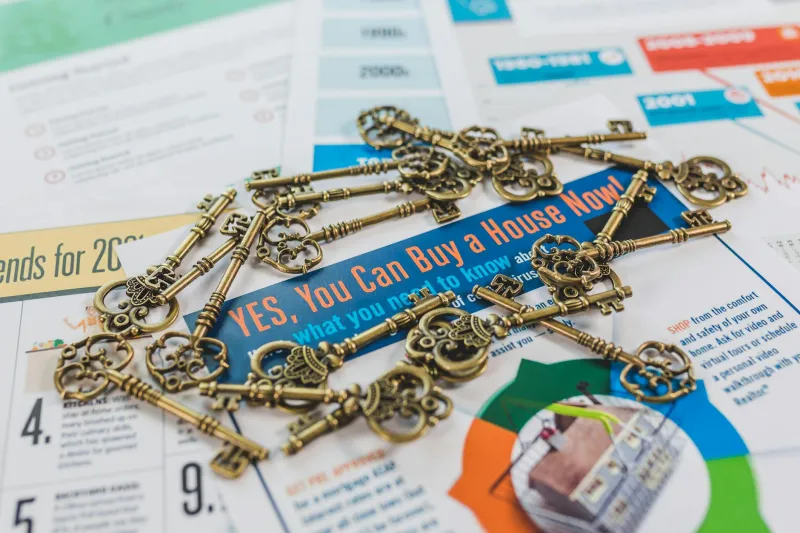
Walk into any real estate office in America, and you'll hear the same advice: start with a modest "starter home," build some equity, then move up to your "forever home" in a few years. It sounds like common sense, right? Buy small, sell big, repeat until you reach your dream house.
Except there's one problem with this widely accepted wisdom: the "starter home" was never a natural life stage. It was a marketing invention designed to keep Americans buying and selling real estate as frequently as possible.
The Birth of a Marketing Concept
Before World War II, most Americans approached homebuying very differently. Families typically saved for years to buy one house—often the only house they'd ever own. The idea of purchasing a "practice home" before your "real home" would have seemed absurd to previous generations.
The starter home concept emerged in the 1950s alongside the suburban boom and the expansion of government-backed mortgages. Real estate developers and agents quickly realized that encouraging multiple home purchases over a lifetime was far more profitable than selling someone just one house.
The National Association of Realtors began promoting the idea that homeownership was a "ladder" you climbed, with each rung representing a bigger, better property. This wasn't based on financial research or lifestyle studies—it was a sales strategy wrapped in the language of the American Dream.
Why the Industry Loves the Starter Home Story
The math is simple: every time you buy or sell a home, multiple parties collect fees. Real estate agents earn commissions (typically 5-6% of the home's value), mortgage brokers originate new loans, title companies handle paperwork, and banks profit from loan origination fees and interest rate resets.
When a family follows the traditional "starter home to forever home" path, they might buy and sell three or four times over their lifetime. Each transaction generates tens of thousands of dollars in fees and commissions. Compare that to a family who buys one appropriately-sized home and stays put—the industry makes significantly less money.
Consider this: if you buy a $300,000 starter home and sell it three years later for $350,000, you'll pay roughly $21,000 in selling costs alone. Add in moving expenses, loan origination fees for your next mortgage, and the transaction costs of buying your next home, and you're looking at $30,000-40,000 in total expenses. That's money that could have gone toward paying down your mortgage or building actual wealth.
The Hidden Costs of Trading Up
The starter home strategy sounds financially smart because it focuses on one number: equity. "You're building equity instead of paying rent," agents say. "Then you can use that equity to buy something bigger."
What they don't emphasize are the massive transaction costs that eat into that equity with every move. Real estate transactions are expensive—often consuming 8-10% of a home's value when you factor in both buying and selling costs.
There's also the opportunity cost. Every dollar spent on transaction fees is a dollar not invested in the stock market, retirement accounts, or simply paying down your existing mortgage faster. Over a 30-year period, those missed investment opportunities can cost families hundreds of thousands of dollars.
How Other Countries Handle First-Time Buying
In many European countries, the idea of a "starter home" is largely foreign. Germans, for instance, typically rent for years while saving substantial down payments—often 40-50% of a home's value. When they finally buy, it's usually their long-term family home.
This approach results in lower homeownership rates but higher household wealth. German families aren't constantly bleeding money to transaction costs, and they're not stretching their budgets to afford "upgrades" every few years.
The Psychology Behind the Myth
The starter home concept persists because it appeals to deeply held American beliefs about progress and upward mobility. It suggests that your housing should constantly improve, just like your career or income. Standing still feels like failure.
This psychological appeal makes the starter home myth incredibly effective marketing. It transforms what should be a practical housing decision into an emotional journey about "moving up in the world."
Real estate professionals have become expert at reinforcing these feelings. They'll show you homes slightly above your budget and suggest you can "grow into" the payments, or they'll point out everything wrong with perfectly adequate homes to justify why you need something bigger next time.
What Actually Makes Financial Sense
The most financially successful approach to homeownership is often the least exciting: buy an appropriately-sized home you can afford comfortably, then stay put for as long as possible. Pay extra toward your mortgage principal, invest the money you would have spent on transaction costs, and resist the urge to "upgrade" unless your housing needs genuinely change.
This doesn't mean never moving. Job changes, family size changes, and life circumstances sometimes require relocating. But treating homeownership as a ladder you must constantly climb is a modern invention that primarily benefits the real estate industry.
The Real Story
The "starter home" isn't a life stage—it's a sales technique that's become so embedded in American culture that we've forgotten it was ever marketing at all. Previous generations understood something we've lost: a home is a place to live, not a stepping stone to something better.
The next time someone tells you that you need to "start small" and "work your way up," remember that this advice comes from an industry that profits every time you buy and sell. Sometimes the smartest financial move is to skip the starter home entirely and buy the home you actually want to live in.